The decision in one paragraph
Cities: Skylines is a relevant choice for readers who enjoy the operational consequences of a layout. Choose it for an interest in managing a simulated city, while keeping a clear distinction between that simulation and professional urban planning.
The idea at the centre
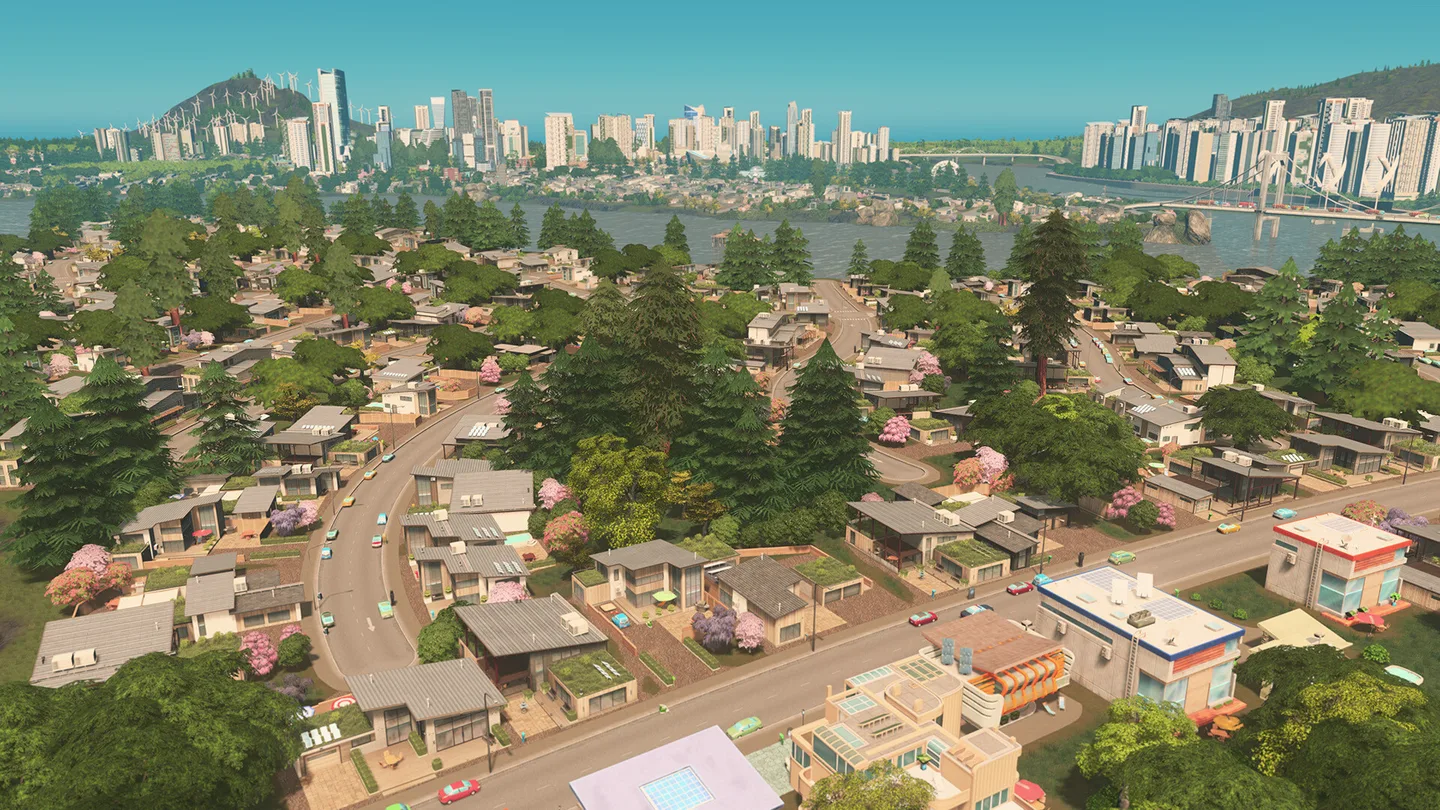
Cities: Skylines presents city construction alongside the work of maintaining a functioning settlement. That pairing is the important point: a district can look orderly while creating demands elsewhere. New homes, workplaces and routes do not exist independently. The strategic question is how a change in one area alters the requirements placed on the rest of the city.
Why the design is worth examining
This gives city building an attraction that is different from arranging a decorative model. A layout is a proposal about how people and services will move and interact. Readers interested in examining consequences may find as much to consider in revising an established district as in adding a new one. The official store frames the game as a city simulation, which is more precise than calling it a real-world planning tool.
The trade-off to consider
It would be misleading to treat a simulation as proof that an identical policy will work in an actual town. Likewise, this review concerns the original Cities: Skylines, not its sequel or every expansion. Optional content and community modifications can change the experience substantially. Hardware suitability should be checked against the current requirements and the kind of city you intend to build, rather than inferred from a screenshot.
A useful way to begin
When a district struggles, look for a connection problem before assuming that it simply needs more buildings. Follow the relationship between the symptom and the services or routes it depends on. If you are comparing editions, list which features are actually included in each purchase so that a useful addition is not mistaken for part of the base package.
Reasons to consider it
- Construction and ongoing operation are linked.
- Layouts can be evaluated through their consequences.
Things to weigh up
- This is the original game, not a review of the sequel.
- DLC, mods and city scale can change the experience.
Who it is for
Cities: Skylines is a relevant choice for readers who enjoy the operational consequences of a layout. Choose it for an interest in managing a simulated city, while keeping a clear distinction between that simulation and professional urban planning.
This is a judgement about the design described by the publisher, not a numerical verdict based on an undisclosed play session. Check representative footage, the current requirements and available options before choosing a version.
Verified product details
- Game
- Cities: Skylines
- Developer
- Colossal Order
- Publisher
- Paradox Interactive
- Store release date
- 10 Mar, 2015
- Desktop systems listed
- Windows, macOS, Linux
- Store genres
- Simulation, Strategy
- Material checked
- 2 November 2026
Desktop systems above refer to the Steam edition. They are not a complete list of console or mobile editions. Availability, price, requirements, age information and edition contents can change.
Sources and image attribution
Official Steam listing for Cities: Skylines ↗
The listing supplied the developer, publisher, desktop-system information and store release date. The article’s interpretation is original editorial commentary. Official artwork and one screenshot are reproduced to identify and discuss the game; no affiliation with its owner is implied.
Original publisher screenshot ↗ · Report an error or rights concern