The decision in one paragraph
Slay the Spire belongs on a shortlist for players who like to build and revise a system while using it. The commitment is to adaptation under uncertainty, rather than to executing the same predetermined sequence every run.
The idea at the centre
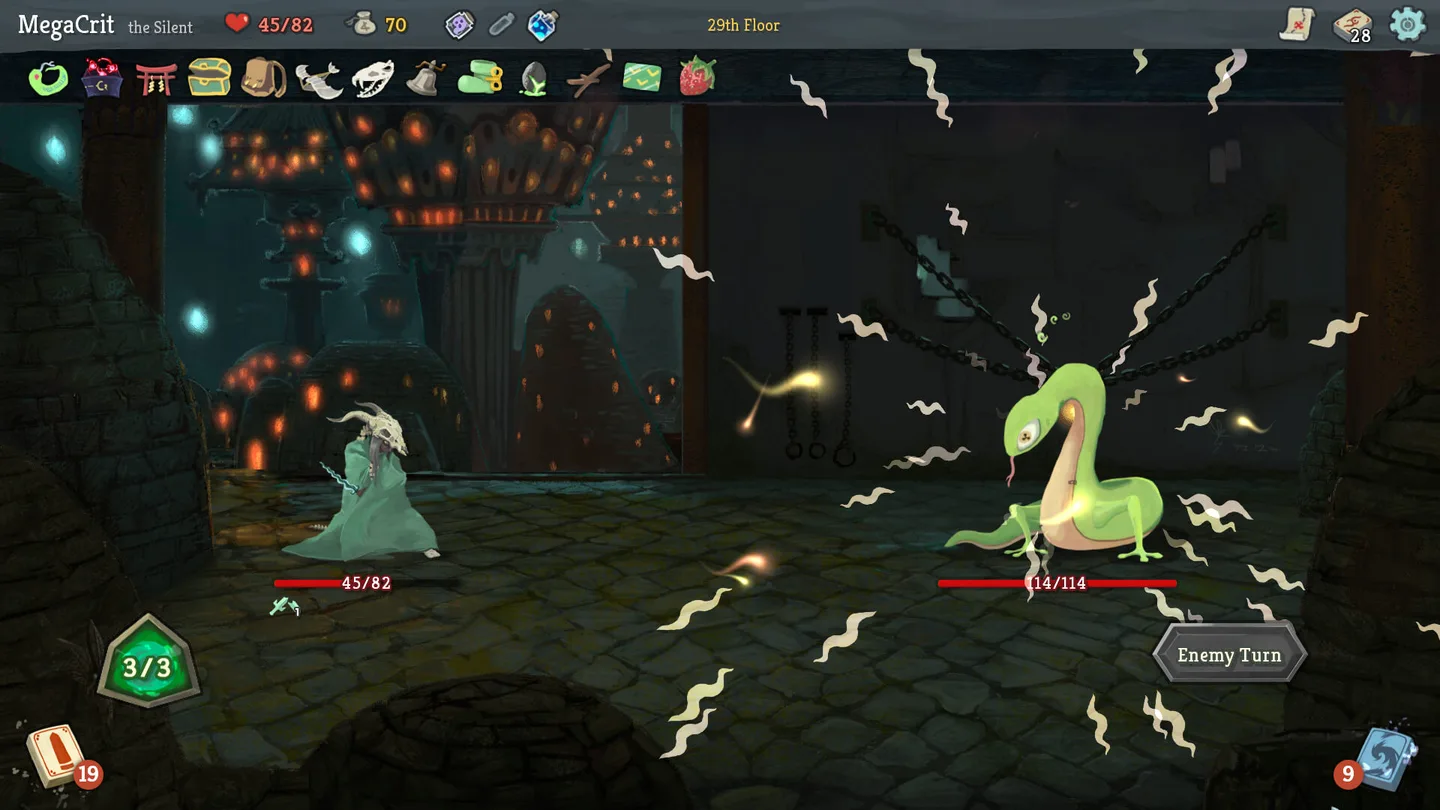
Slay the Spire combines card-based play with a roguelike structure. The important strategic relationship is between choosing a card for an immediate problem and shaping the deck that must handle future encounters. A card can look useful by itself while changing how often the rest of a plan appears. That makes selection, not just playing a hand, part of the tactical argument.
Why the design is worth examining
This is a useful proposition for readers who enjoy decisions that accumulate. A choice can change what combinations are available later, so the route through a run becomes connected to the deck’s developing identity. The publisher also highlights relics and unusual encounters, which provide more context for judging a card than its text alone. The analysis should therefore focus on relationships rather than treating every option as independently strong or weak.
The trade-off to consider
Randomised elements mean that having a plan is not the same as controlling every draw. If your preferred strategy format offers complete information and a stable starting position, consider whether that uncertainty is enjoyable. We do not publish a universal card ranking or claim a particular win rate; both would require a specific rules version, play history and a clearer definition of the conditions being measured.
A useful way to begin
Ask what the current deck lacks before accepting another attractive effect. Consider how often a card will be useful and what it asks other cards to provide. When comparing strategies, keep the immediate encounter and the longer route separate in your notes. That helps distinguish an emergency choice from a card you would want as the centre of a plan.
Reasons to consider it
- Card choices connect individual fights with a longer plan.
- A single-player format avoids dependence on competitive queues.
Things to weigh up
- Random draws introduce uncertainty.
- A fixed universal card ranking would hide important context.
Who it is for
Slay the Spire belongs on a shortlist for players who like to build and revise a system while using it. The commitment is to adaptation under uncertainty, rather than to executing the same predetermined sequence every run.
This is a judgement about the design described by the publisher, not a numerical verdict based on an undisclosed play session. Check representative footage, the current requirements and available options before choosing a version.
Verified product details
- Game
- Slay the Spire
- Developer
- Mega Crit
- Publisher
- Mega Crit
- Store release date
- 23 Jan, 2019
- Desktop systems listed
- Windows, macOS, Linux
- Store genres
- Indie, Strategy
- Material checked
- 2 November 2026
Desktop systems above refer to the Steam edition. They are not a complete list of console or mobile editions. Availability, price, requirements, age information and edition contents can change.
Sources and image attribution
Official Steam listing for Slay the Spire ↗
The listing supplied the developer, publisher, desktop-system information and store release date. The article’s interpretation is original editorial commentary. Official artwork and one screenshot are reproduced to identify and discuss the game; no affiliation with its owner is implied.
Original publisher screenshot ↗ · Report an error or rights concern